Monday, November 11, 2013

Advertising

When I was eleven I had an overwhelming need that dominated my existence.  The absolute NEED for an ipod.  All my friends had one, all of the ads had cool people and not to mention it came in blue and pink, it was a necessity.  Needless to say, may parents did not see my need as anything more than a want, but that may have been because all of the campaign crazy ads were not targeted towards their demographic.  After a certain amount of time I saved up enough money and was rewarded with a ginormous ipod that held a whopping 4 gigabites of music.  In six months the newest ipod was out and six months later an even newer version.  Within two years my old NEED wasn't even being manufactured anymore and the next newest most popular brightest toy was being promoted, the desire to have it was equal to my twelve year old consumer based reality

Advertising seems like such a simple topic, but in reality, like most things it has incredibly complex minute factors.  From the billboards we see on the freeway to the advertisements we read on our webpages and in our magazines, advertising is everywhere.  In a society that has been cultivated to become increasingly consumer oriented, advertising has become a part of daily life that we both realize, and underestimate.  Today, I will briefly summarize just a few of the marketing principles and advertising strategies that go into every ad we see in our everyday life.

When people think about advertisements, though often don't think about the teams of people that collaborated on how to pick out the best advertisements for any certain product or service.  The goal of advertising in general is simple, make people believe that their wants are indeed their needs.  The needs of us are relatively limited, safety, food and water.  And yet, when the newest ipod comes onto the market, many of us may believe that we physically need it it.  This is largely thanks to excellent advertising and relative popularity of any certain product or service.

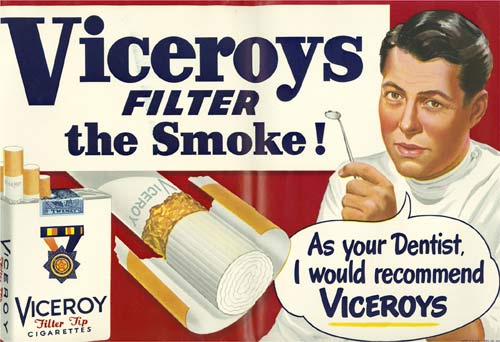
Through my readings and experiences I have learned about a variety of advertising strategies commonly used both in the past and today.  First I would like to highlight the association principle.  This principle, like most advertising principles, is about persuading the buyer by association to something that the consumer wants to see.  Positive cultural images and values are key to this principle, regardless about how little the association might actually have to do with the product or service.  In a way, it might all seem like an elaborate trick, but after all advertising doesn't force us to believe anything, just paints an impressive picture


An effect that I have often seen successful in my peer age group is the bandwagon effect. The idea that if everyone else is doing it/buying it, you will uncontrollably feel the desire to jump on the bandwagon.


Next we have the famous person testimonial.  Exactly like it sounds, the famous person approach uses the familiarity and idolization of famous people as icons encouraging you to believe in their product.  The idea being that if this amazingly beautiful/successful famous icon thinks it's the best, why wouldn't you?  Don't you want to be more like your favorite icon anyway?  Of course this approach hinges heavily on the appreciation of a certain figurehead within a society.  If peoples opinion of an icon falls, than their opinion on the product might fall if the person is still associated with the product.  This presents a double edged sword for the more risky famous people getting advertising deals, it's all about what the majority of people want to see.


A few of the more aggressive advertising tactics are the snob-appeal approach and the irritation advertising.  Irritation advertising is something that is typically used in local advertisements as opposed to national and international campaigns.  This type of advertising is typically not very successful, though there are the flukes that do occasionally work.  Lastly there is the snob-appeal approach.  This approach is all about appealing to the consumers desire to rise in social ranks, a task which can be accomplished by buying whatever good their selling.  These are typically more "luxury" items, or items that advertisers want consumers to think are more fancy or high class.

As times change, cultural values change as does our idea of beauty and what is appealing.  When comparing ads from the early twenties to today, our idea of what would attract us to buy that product are completely different.  Much like many things, this industry is constantly evolving and changing.

Ultimately these are just a few of the varied methods, approaches and effects that marketers and advertisers use on a daily basis.  The next time you read or hear an ad you'll probably be able to classify it under one of the aforementioned concepts.  While clever marketing is key to the success of a product, it almost seems like willful misleading or manipulation of the consumer.  I guess the key is to base your purchases more off of research into the actual product than flashy marketing schemes which may or may not be the most upfront.

Tuesday, October 29, 2013

Film Problems

The film industry is in no large state of decline.  In a country that is in a heavy state of economic decline, hollywood has managed to do more than just stay afloat, but rather, to thrive.  There is no doubt that hollywood has created it's own area, both in the United states, but seeming to exist in it's own world.  But my question is, what effect does the movie industry have on the kids involved in it?

For the sake of this I'll mash television and movie industries together to have a broader pool of examples to pull from.  The times today give us a wide variety of names to pull from, for hollywood potential, gone terribly awry.  While adult starts have had their fair share of extravagant behavior perhaps to be blamed on hollywood, child stars have had an incredibly unique experience of growing up in this world.  Does this effect their behavior in the future?

Take for instance Amanda Bynes.  She was a breakout actor and comedian by the time she attended a comedy camp and started acting at the age of 7.  By the age of thirteen she had an incredibly popular kid show The Amanda show.  After nickelodeon had fostered her talent by giving her a self titled show, she started a big movie career beyond the small screen.  In 2011 Bynes announced that she would be taking time off.  A surprise to many people who thought her movie stardom was just reaching it's peak.  However, the young starlet spiraled out of control within the next few years.  Currently Bynes has been in a mental facility for a matter of months after a slew of inexplicable odd behavior, often illegal and obviously attention seeking.  The question becomes, is this latent behavior present beforehand?  Or is the hollywood lifestyle affecting stars, and effectually changing what their behavior would have been.

Remember the nineties show Full House?  Who could forget the lovable child character played by Mary Kate, and Ashley Olsen, as well as Jodie Sweetin and Candice Cameron.  This show provides the perfect side by side analysis of how Hollywood MAY have an effect on how children grow up.  Mary Kate and Ashley Olsen got their start on Full House form the time they were babies to their early years.  Spring boarding from Full House, they had individual movie lines, complete clothing lines, toy lines, a full merchandising suite.  These two stars were massively successful, and while they had their times dealing with personal issues, there was never any illegal or illicit activity.  Jody Sweetin on the other hand was nowhere near as successful, but still had the problem of growing up in the spotlight.  She had her fair share of success, but like Candice Cameron at a certain point distanced herself from the Hollywood industry.  While there has been no scandal for Candice, Jody has had repeated bouts of drug use and supposedly underage illicit activity.


While others might have a clear case of behavior turned extremely exhibitionist and unstable, some stars use their crazy behavior as nothing more than a publicity stunt.  Take for instance, Miley Cyrus.  It is currently being argued by many that hollywood or even disney in particular have effectually "ruined" her.  While these statements may or may not have any validity, unlike many other child stars, Miley Cyrus is not doing anything certifiably insane, nor illegal.  Stars such as Amanda Bynes, Lindsey Lohan, and Britney Spears, have exhibited behavior that puts both themselves, and others in danger, Miley Cyrus has only asked for attention.  The argument that people are making, is that hollywood MADE her do this, it made her who she is.  While very little research one can find out that Miley was a bit the rebel before Disney ever got it's claws into her.  As a child Miley Cyrus was repeatedly kicked out of private schools, and remember those provocative and inappropriate pics when she was underage?  That was all her decisions, outside of the hollywood limelight.  I think that at times Hollywood gives a stage and a voice to people, whether or not those people are extravagant is due to the person, not the industry in which they work in.

The end all question that is being asked is age old, is it nature or nurture?  Are these people who have been highlighted and spotlighted from a very young age being affected by the film industry?  Or are these children being  spotlighted, already having a predisposition to  rebellious and or mentally unsound decisions?  Perhaps we will never know, but the number of stars that have turned out unhealthy, makes one question if perhaps, the film industry may be to blame.

Thursday, October 17, 2013

Music: And Why Would Should Listen to the Problems it Faces

Music is something that cultures all around the world can relate to.  While the type of music may vary and the importance may differentiate, it is almost always present in some way shape or form.  The music industry in the United States is something quickly facing vast crisis for a number of reasons, not the least of which being, the rise of technology.

Music has had a long standing history of allowing artists to support themselves by doing what they love.  With the rise of technology, however, while new music is being produced and published, the profit which the musician receives has been significantly reduced.  In the past the consumer was limited to purchasing the entire album to hear any particular song, now, the consumer can pay a fraction of the cost for a single hit downloaded straight to their device of choice.  Beyond the invention of instant downloading, there is also the increasing issue of piracy.

In a this country where the economy is on increasingly less stable ground, the music industry has taken a turn for the worse.  Technological literacy is on the rise, people are consistently learning more and more about how to take advantage of the technology they have on hand.  The increase of pirating on a worldwide scale has become a real issue for the survival of individual artists in particular.


A particularly relevant story comes from the mid 2000's there was the invention of a music downloading and sharing site called Napster.  While this site and company has since been shut down, it set the first precedence for sharing music freely, essentially cutting out the necessity of actually supporting the artists and unavoidably the producing companies which these artists 'belong' to.

Courtesy of secretofthefed.com
Another large issue the industry is facing is control.  As of 1996 when the Telecommunications Act passed, there is virtually no limit to the number of radio stations and production companies that corporations can own.  A highly unfortunate situation arises when this happens, conglomerate market control.  Inevitably when the act was passed a few leading companies made moves to dominate the market place by slowly swallowing smaller companies.  In the music industry today while the names of production companies and radio stations may vary, three main companies have the majority of the control, meaning the music industry is dominated by an oligopoly.  These three companies according to Media & Culture (Campbell 2012) are Time Warner Music group, Sony Entertainment Music Group, and Universal Music group, with independent companies only making up 12% of the total market.

The real question is now, why should we care? There are a few choice companies deciding what prepackaged pre-approved music you're going to hear.  Unless you go out of your way to find the independent artists who don't fit the company mold for the highest profit margin, you won't hear them.  Most everyone tries to follow a formula that will yield the highest profit margins the fastest, which  edges out individuality that many of these independent artists boast.

Ultimately, the music industry is in crisis for a number of reasons.  Pirating takes away money from the artists and companies, while the companies are slowly edging out many individual artists themselves.  The people in the end who are losing are the consumers, and the artists themselves.  If you are an artists and you do not fit the typical formula, it will be a hard time trying to find a company to take you on.  If you are a part of a label, especially if it's smaller, pirating will be incredibly damaging to your income.  We should all be demanding better piracy laws, a crackdown on the theft of peoples livelihoods.  Also, why should an oligopoly be acceptable in the music industry when it isn't elsewhere? We should all be demanding our diversity.

Tuesday, September 24, 2013

Extra, Extra, Read All About It!


Print media, namely newspapers, has been in a considerable state of decline over the past fifteen years.  Since the rise of easily accessible online news sources.  While the idea of widely accessible, and often times free news is a excellent theory, it has been slowly but surely threatening the validity of print newspapers.  This threat is including but not limited to, the New York Times.  While the New York Times is not the only print news source in crisis, it is one of the most well known.  Considering this publication is one of the largest and well known newspapers in the United States, I will focus on the troubles it has faced in the past few years.

When it comes down to brass tax, it's all about the money.  Newspapers are not free, and like anything, you pay to get the information provided.  While the price varies, all newspapers aim to be affordable to the largest demographic in the hopes of upping their readership.  Even though we pay for newspapers, according to the movie about the New York Times entitled "Page One: Inside the New York Times", the profit margins for the company remains largely on the shoulders of advertising space.  Advertising, unfortunately, is where the for the Times, problems arise.

Online news sources reach such a massive and diverse audience that advertisers have been taking advantage of the endless opportunities of the worldwide web.  While readers of the New York Times print edition have been becoming increasingly disillusioned with the idea of print news, the masses online will only continue to take advantage of free information on the web.  From an economic perspective it is impossible to deny that the advertisers are making the logical choice.

This is not to say that the New York Times will cease to exist, in fact, if anything it is simply part of the evolution of the company.  If the company can manage to change with the times, they can continue to reach massive audiences and remain a relevant source of information.  The New York times has a website which offers free news, but also advertising space.  This space helps keep the site up and running.  Is it enough?  I wouldn't know the exact financial numbers, but I do know that the company has been forced make employee cut-backs since 2009.

The big question facing consumers today is, why buy the newspaper?  Today people can easily go online and for free access very similar if not the same news stories they could find in the newspapers.  As a matter of fact, they can go and within minutes check five or six different news sources without paying a dime.  All this isn't even mentioning the green benefit to the demise of print news.  While much of the newspaper is recycled, there is no waste over checking the internet, so what is the downside?

In my opinion the fear of a paperless society is driven by sales oriented businesses who are clinging to an archaic archetype of what they THINK society should be like.  In reality, why do we need print newspapers?  What is the world gaining by having the print aspect as opposed to or in addition to online?  I'm not implying that total eradication is in the best interest of society, but if one or two of the big companies were to become completely online, it would not be the end of the world.


The fact, wether unfortunate or not is that print news may very well be on it's way out the door.  Regardless of the fact that it's been around for centuries, something more efficient has come about and people are bound to gravitate towards whatever is easiest (and cheapest).

Tuesday, September 17, 2013

Google It!


When I have a question about anything in particular, if a person can't answer it, the common thought that comes to mind is Google it!  In the age of instant gratification, almost any question you can imagine can be answered by the super search engine amusingly titled "Google".  While other search groups such as bing and yahoo have a strong support group, no search engine business  can seriously compete with the ever growing Google empire.  Throughout this blog I aim to inform you about interesting and relevant facts in regards to the Google life and it's incredible impact on the media and our view of it today.

How did Google come to be?

Simply enough two grad students had an idea in 1995 that they aimed to make a reality.  This whole process started, with a formula.  This formula, would rank relevancy and compile websites into a easier to sift through list. By 1999 the pair had raised a whopping almost 30 million dollars, just with their idea alone.  This money came from a mixture of investments from public sectors, private sectors, and their alma mater Stanford University. Later that year, the Google idea became a reality.
Think of all the Google centric products we use without even really thinking about it.  On a daily basis one might utilize any one, or all of these Google services:

  • Android (mobile operating system)
  • Blogger (blogging tools)
  • Gmail (e-mail)
  • Google Analytics (Web traffic measurement)
  • Google Chrome (Web browser)
  • Google Desktop Search
  • Google Language Tools (translation tools)
  • Google Talk (instant messaging)
  • Google Toolbar (browser plug-in application
  • Google Earth
  • Google Maps
These are not even a full list of the services google offers!  There are several other Google services and services offered under the Google corporation umbrella.

One reasons which Google is incredibly powerful in the media world today, is the fact that the Google name alone is not all that the Google corporation owns.  The Google company, as of 2011, owned Zagat, Invite Media and Adscape, Picnic  along with over a dozen other companies.  One of the websites Google owns, has incredible power over people today, YouTube.  The popular video sharing site has tens of millions of views per day.  Not only are these views from inside the US, but from virtually every country across the globe.  The type of power that YouTube has is often forgotten.  This one site has the ability to reach large and vastly different demographic makes it an intensely powerful tool.

Blogger much like youtube allows a mainly uncensored voice to those who otherwise might not be able to reach as large an audience.  In a largely uncensored and capatilist friendly website, Google has encouraged the independent voice to be heard, or at least published.  While it might cost you a pretty penny to feature your blog, you can use a google tool to advertise other companies on your website and potentially make a few bucks yourself.  Giant corporation aren't all bad after all.  But consider this, for every ad space that you give out at your blog, arguably encouraging excessive consumerism you are in essence selling out to the popular trends of today.

Google's interest in advertising is perhaps it's strongest form of influence.  Depending on your search history and or personal browsing history, Google's product adSense provides personalized or targeted ads particularly for you.  What people are shown on a daily basis could arguably begin to affect ones ideas.  Whether you look at it positively or negatively, Google's advertising dominates the internet sphere.

Youtube allows for videos to be streamed and viewed that news stations wouldn't necessarily allow.  For extremist governments that censor excessively not just inappropriate media, but media that portrays the government in a negative light, youtube provides a sort of voice and freedom.  Youtube still decides to take down videos it deems inappropriate, but it is vastly a source of allowing people a voice, who otherwise might not have one.

According to respected company profiling website Hoovers.com, Google Inc came in at an impressive #55 in CNN's fortune 500 list as of May 2013.  How did a search engine start to make all that money? Ad space is the name of the game as far as making money in the search engine market goes.  In a way, Google initially was much like a middle man, connecting advertisers to hundreds of thousands, and eventually millions, of costumers.

How about your phone?  Do you use an Apple phone?  Because if not, you are probably using a phone that operates on an Android operating system.  If you have a tablet (Non-Ipad), it's probably runs a version of Android. We personally, entrust google with some of our most private and sensitive information, without even really thinking about it.  Whether we are looking up our financials, checking our emails, or adding to our online backed up contact list, Google holds many of our lives in it's  hands.

Recently, while most companies are worried about cutting costs in a challenging world economy, Google Inc. in 2010 alone spent upwards of 1.8 Billion dollars in acquisitions of other companies alone.  It is reported that they acquired a serious 50 company names for that price.  Google Inc. hasn't always stayed on the internet though, over time Google has produced their own phone line as well as certain other electronics.  Have you ever heard of Motorola? Well, in 2012 Google purchased the Motorola mobility holdings for a staggering 12.5 billion dollars, a record purchase for them.  Even with all of this excessive spending, considering the size of the company the finances of the company has managed to stay positive and in the green for the entirety of the last few years.
Essentially if you are searching for something, you'll probably Google it.  While this might not seem like anything but helpful, the Google corporation is deciding what it will and will not show you first. Many people will not look at the tenth or twentieth page on their google search, allowing some of the lesser known websites to remain lost in the ethereal mist that is the internet.  If someone isn't paying to get their site featured, it's up to the searcher to sift through the prepackaged chosen websites, to find the one their looking for.

News is also a huge source of influence that companies have.  Depending on what articles and news we are shown, we might come to different conclusions about what is really going on in the world. Google news is a popular section of Google which holds a large amount of influence over what people see.

When it comes down to finances Google is far from going down hill.  In the past 60 months their revenue has increased a surprising 24%.  If you look at only the past 12 months, their revenue growth has increased by over 30%.  An increase of that percentage is impressive no matter how vast the company.  According to most, Google is the top internet advertiser seller in the world, talk about brand recognition.

Ultimately, while we realize it or not, Google Inc is a huge part of the average American's internet excursions.  If you haven't been on Youtube or Google, you probably don't own a computer.  As Google continues to grow, I believe that they will become a global powerhouse to be reckoned with far outside of the search engine realm.


References
McLellan, M. (2013). Google inc.. Retrieved from http://ezproxy.reinhardt.edu:2190/H/company360/financialMarketData.html?companyId=59101000000000

Company overview. (n.d.). Retrieved from http://www.google.com/about/company/

"Who Owns The Media?" Retrieved from http://www.freepress.net/ownership/chart

Tuesday, September 10, 2013

Studying Media: Discussing the Various Methods

Since the early 1900's there has been a curiosity about the effects of media and the "right" way to research the effects that media may or may not have on people, both intentionally and unintentionally. As with any new thing that people discover, multiple methods were soon introduced in the hopes of finding the most effective way to research this.  Cultural research into media was soon introduced, as well as a scientific research on the topic. It is important to note that over the years these methods have changed and evolved in the hopes of staying current.

The earliest methods utilized for analyzing the media are as defined by Media & Culture by Campbell, Martin, & Fabbos and are as follows:
  • Direct Effects (Also known as the hypodermic model)
  • Limited or Minimal Effects model
  • Uses and Gratifications model
Direct effects, or the hypodermic model, is named as such because it views media as injecting itself into peoples minds.  In a way directly choosing a purpose and following through.  The Limited or Minimal Effects model views media as a sort of subjective concept in which people will take from it what they want.  In essence, the media doesn't change what people think, only allows people to pick and choose the meaning they want to take from it.  Lastly Uses and Gratifications model implies that we as consumers utilize the media to satisfy our own needs.  That we can choose what we take from it in a way, which is similar to the Minimal Effects model.


Curtesy of: www.karanovic.org -
After World War I there was an increasing concern about the unpredictability and uncontrollability of the media.  Considering the large role that  propaganda played in World War II it is easy to see why this concern was incredibly valid.  Beyond the psychological manipulation for political purposes, companies became increasingly interested in how to best sell their products.  While manipulation might not be the best word when considering the consumerism that was being created, strong suggestions seemed to be the motto of the day.  People soon began getting barraged everywhere with messages and advertisements on how to be the better you.  As we have seen in the twenty first century, specifically the industrialized first world countries and the United States, we are becoming more and more so a consumerist world filled with suggestions and media barrages from the day we are born. A common theory is that we, consumers, are passive receivers to the media.  Being spoon fed ideas without even knowing it.

Once an aspect of media has decided what idea they want, next they have to decide the fastest and most effective ways to pique peoples interest.  Consequently people discovered that sex sells, and unfortunately, so does violence.  This is of course not applicable to all demographics, but rather the target demographic of the media text.  Demographic meaning age and or social group.  For instance 25-35 single males is a demographic or kids between the ages of 2-4, etc.  Finding their target demographic is incredibly important for creating the right type of media to reach them.

An important question this raised for me, is what are the impacts going to be on the next generation moving forward?  When we allow ourselves to be fed what the media wants to feed us, are we really going through the necessary research before we create opinions?  Many peoples perceptions are greatly altered by what they see in the media.  The media drives perception, isn't it then our duty to make sure this power is used ethically?


Take for example, children's role models today.  Instead of being based on strong respectful people, they are the most played on TV, the most encouraged by society.  When our children look up to the Jersey Shore as a positive example, we have a problem.  Reality TV itself has served to skew our view on reality considering  very few accurately portray the average persons life.  When children grow up emulating those behaviors and expecting good results, we as a culture will need to rethink how media really can effect us now and in the future.  It has become almost solely the responsibility of the parents to limit what media they allow their kids to access.  Children will start to develop a warped sense of reality if they base it one television shows and media outlets.

The idea of skewed reality is not exclusively tied to reality TV, but also perhaps more importantly news sources.  Depending on where you take your news facts from, your idea of what's really going on in the world can be vastly different.  Depending on the political inclinations of the news source the news, both intentionally and unintentionally can be biased to varying degrees.  The media unfortunately creates an often false sense of reality, its up to the individual to decide what really is going on in the world.

Ultimately, our perception of the world can be effected by the media.  How we decide to study media can effect our perception e of it.  The media and its impact, in a way, can be argued and taken subjectively.  We should all continue to study it and try and understand it, because anything with that much power, could be used as a source of knowledge, or a weapon.


Monday, September 2, 2013

Addressing the Privacy Myth in the Technology World


In the twenty first century many people like to think they understand and value their privacy.  The unfortunate reality is, not many people even know when they're compromising their own highly valued privacy.  In this day and age when many people have cheap and easy access to technology, they often times don't know when they implicitly compromise their own privacy.  The internet, while one of our greatest assets, is also a huge liability for unintentionally waiving our rights to privacy.  The trickiest part of all, and perhaps the most discouraging, most times the internet warns us.
http://www.colourbox.com/preview/3287998-899901-privacy-policy-computer-key-in-blue-showing-company-data-protection-terms.jpg

Ever signed up for an app on Facebook, or signed up for a website?  Do you know how much information you really share when you do? Remember that agree to terms and conditions button, do you really read it?  When it talks about a privacy policy, do you really go through it?  I don't.  After attempting to read one or two I realized, who has that kind of time?  Many of these agreements have included clause after clause of their fine print stipulations in which they can collect information off of your computer or phone etc. without your explicit permission beyond the privacy agreement. How can they do this without you knowing?  Simple, you agreed to it.  By pressing that "I Agree" button you are signing an electronic contract with that site allowing them to do whatever they have stated in the somewhat ridiculous long and obtuse privacy policy and terms and conditions.

Too good to be true, is far more accurate a statement than we should like.  When websites offer free things, often times these things are just too good to be true.  You pay in information, something you can't barter back.  Most times you wouldn't notice, tell you get those pesky tall marketer calls.  Next time when you're sitting there wondering, how did they all get MY number?  Remember, that free thing, that free site, a free trial, not so free anymore.  How high a price can you put on the ever important and not so understood, personal and electronic privacy?

.

Feeling angry yet?  Well, you're not alone, but believe or not things could be worse.  Back in 1995 the
U.S Federal Trade Commission, also known as the FTC, has been working on setting appropriate rules and guides for companies and corporations to follow online (Campbell, Martin, & Fabos 2013).  These rules are changing to adapt to the current situations, but the internet is not something that can be constantly policed and contained under guidelines.  Ultimately it's largely up to the consumer to protect their privacy.


You might wonder now, what would anyone want with your information?  Well, more than you might think.  Your internet browsing history can be sent to analysts which then help make decisions about products you may or may not support.  Ever wonder how sometimes ads pop up that seem personalized just for you and your preferences?  Well, most likely that's exactly the case.  By surfing through your information companies can tailor pick ads and promotions that are most likely to appeal to you. Sometimes to trick you into giving out more information.  Don't fall for their traps.

So what can you do?  Simple and yet disappointing because the best thing to protect yourself is to educate yourself.  Limit your exposure by knowing what you're agreeing to when you click that agree button.  If you don't feel like you have the time to read the policies yourself, do a little internet detective work on the websites you're thinking about giving your information to.  The more you know, the better you can help protect your privacy.

Here is a short video about why you should care if you don't already yet.  In case everything you know isn't enough to make you wary of those information gathering websites, this should help educate you on what people really do with that information.


Hopefully armed with the information that books and the internet provide, we can all strive towards a clearer understanding of what we share with the world.  I for one, know that I will be doing a whole lot more research before I hand over any of my information.  And while sharing is all fine and well, my information is personal, and you, and anyone else,  can't have it.